

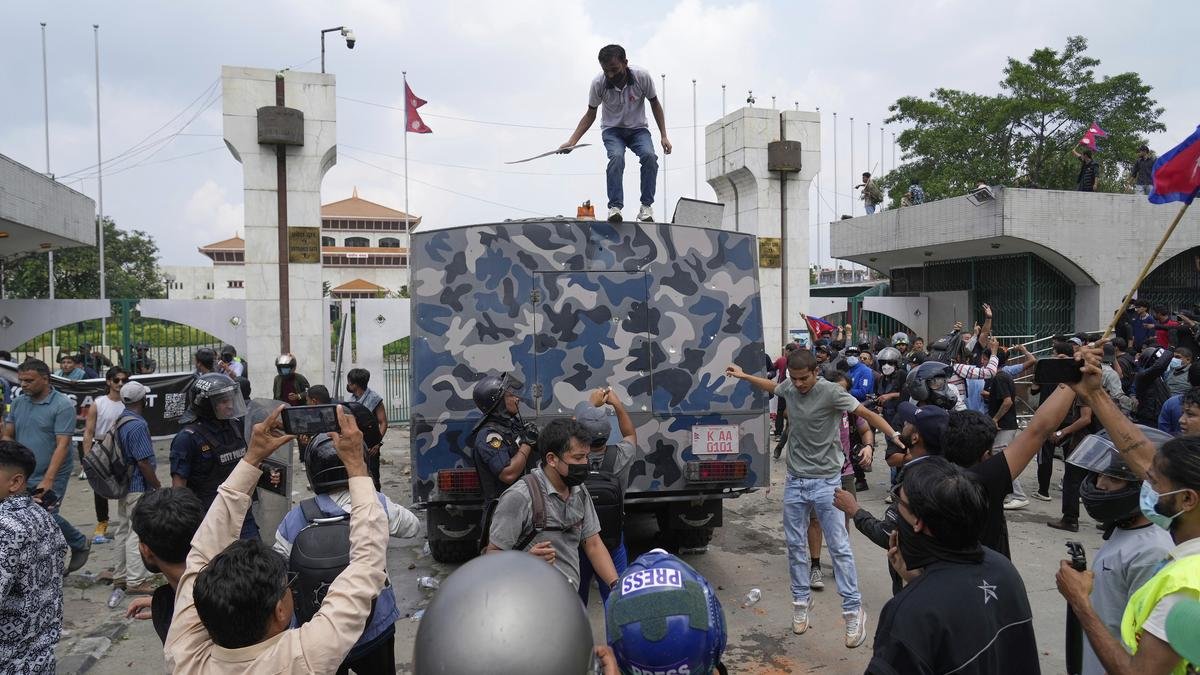
Kathmandu, September 8, 2025 – Nepal is facing massive unrest after the government banned access to 26 popular social media platforms, including Facebook, Instagram, WhatsApp, YouTube, and X. The move has sparked nationwide protests, leaving at least 14 people dead and dozens more injured in violent clashes with security forces.
The ban, imposed on September 4, was justified by the government as a measure to curb hate speech, fake news, and cybercrime. Authorities said the platforms failed to register with Nepali regulators and establish local grievance redressal systems. Platforms such as TikTok and Viber, which complied with the new rules, remain operational.
On Monday, thousands of young protesters — largely from the Gen Z generation — flooded the streets of Kathmandu, Biratnagar, Pokhara, Butwal, Nepalgunj, and Chitwan. Demonstrators carried placards demanding the immediate lifting of the ban, shouting slogans such as “Ban corruption, not social media.”
Clashes escalated outside Parliament as protesters tried to break barricades. Police responded with water cannons, tear gas, rubber bullets, and eventually live rounds. Hospitals in Kathmandu reported being overwhelmed with casualties.
The government has imposed a strict curfew in sensitive zones around Parliament, the Prime Minister’s residence, and Singha Durbar. The Nepali Army has also been deployed to restore order.
While the government insists the ban is essential for national security, protesters argue it is a direct assault on democracy and freedom of expression. Political analysts warn that the unrest, if prolonged, could destabilize the country’s fragile political landscape.


