

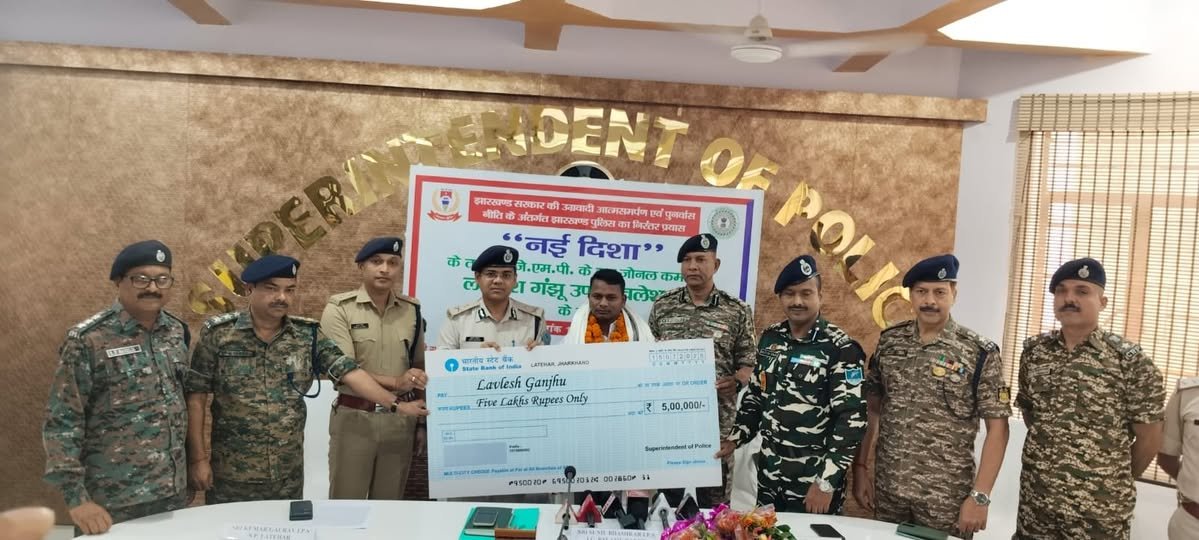
In a powerful turn of events, Lovelesh Ganjhu, a dreaded sub-zonal commander of a banned Maoist outfit and carrying a bounty of ₹5 lakh, has laid down arms and embraced peace, surrendering before state authorities under the Jharkhand Government’s Surrender & Rehabilitation Policy.
Once the architect of fear in Maoist-dominated regions, Ganjhu’s decision marks a significant shift — both personal and political. His surrender highlights the growing impact of the state’s compassionate yet firm approach, offering former rebels a path back into society with dignity and purpose.
Senior officials hailed the move as a “tactical and symbolic win,” noting that Ganjhu’s return to the mainstream sends a clear message to others still in hiding: “Violence leads to nowhere — development is the real revolution.”
As part of the government’s rehabilitation framework, Ganjhu will now receive support for housing, employment, and reintegration — transforming from a symbol of unrest to an agent of change. “Drop the gun, pick up growth.” — Jharkhand’s Call to Extremists This story isn't just about surrender. It's about second chances, real change, and a state writing a new chapter — with peace at the center.


